Iraqi Customs and Etiquette: Understanding Everyday Life
From greetings and sharing tea to visiting homes and sacred places, discover the customs and everyday traditions that shape life across Iraq.
By Visit Iraq · Published · 9 min read

There are things you can learn about Iraq before arriving, and others you'll only understand once you're here.
The way someone welcomes you into their home. The conversations that begin over tea. The little expressions people use with one another. The importance of family, faith, and the places people hold close to their hearts.
These details are part of everyday life.
You don't need to know every tradition before visiting Iraq. But understanding a few of them will help you feel more comfortable, connect with people, and appreciate the country beyond its landmarks.
Here's where to begin.
First, Remember That Iraq Is Many Cultures
Iraq is home to people with different languages, religions, traditions, and ways of life.
Travel from Baghdad to Erbil, from Mosul to Basra, or from Najaf to the villages of Duhok, and you'll notice that everyday customs aren't always the same.
Arab, Kurdish, Turkmen, Assyrian, Chaldean, Syriac, Yazidi, Mandaean, Armenian, and other communities have their own histories and cultural traditions.
And within those communities, people are individuals.
A family in central Baghdad may approach certain customs differently from a family in a rural village. Younger generations may have different habits from their grandparents.
So while this guide introduces common practices, don't treat them as rules that describe every Iraqi.
The best way to understand a place is to pay attention to the people who live there.
How People Greet One Another
Greetings are an important part of social life in Iraq.
You might hear someone say Ahlan, Marhaba, or As-salamu alaykum.
Sometimes a greeting becomes a longer conversation, with questions about how you're doing, where you're from, and how your family is.
In Iraqi Arabic, a common way to ask how someone is doing is Shlonak? when addressing a man, or Shlonich? when addressing a woman.
In Kurdish-speaking areas, you may hear Slaw, a simple way to say hello.
Don't worry about getting every word right. Even a small effort to use the local language is often appreciated.
Physical greetings can also differ.
Some people shake hands. Friends and relatives may embrace or greet one another with kisses on the cheek.
Others prefer not to have physical contact with people they don't know, particularly across genders.
If you're unsure, begin with a friendly verbal greeting and let the other person indicate whether they'd like to shake hands.
A smile or a hand placed over the heart can also express warmth and respect.
The Meaning of Hospitality
Hospitality is one of the most familiar parts of Iraqi social life.
You may be offered tea in a shop, invited to sit for a conversation, or welcomed to share a meal.
Sometimes a small interaction turns into something longer than you expected.
That's part of what makes getting to know people so interesting.
But hospitality isn't a performance put on for visitors. It's something that exists between families, friends, neighbours, and communities in everyday life.
When someone offers you something, respond with appreciation.
If you'd like to accept, enjoy it. If you need to decline because of dietary restrictions, personal preferences, or other reasons, a warm explanation and a thank you are perfectly reasonable.
The important thing is recognizing the kindness behind the gesture.
Tea Is More Than a Drink
Spend time in Iraq and you'll soon become familiar with chai.
Iraqi tea is typically strong, often served sweet in a small glass.
You'll find it in homes, cafés, markets, workplaces, and places where people gather to talk.
It can accompany almost anything.
A family visit. A conversation between friends. An afternoon in a bookshop. A discussion that continues long after everyone thought it would end.
In Baghdad, places such as Shabandar Café have long been associated with conversation, literature, and the social life of the city.
If you're offered tea, don't feel that you need to rush through it.
Sometimes the conversation matters more than what's in the glass.
Visiting Someone's Home
Being invited into an Iraqi home can be a meaningful experience.
If someone welcomes you, show the same respect you'd hope a guest would show in your own home.
Arrive at the agreed time, bring a small gift if appropriate, and follow the household's lead.
Sweets, fruit, or something thoughtful from your own country can be suitable gifts.
At some homes, you'll be expected to remove your shoes before entering. At others, your host may tell you to keep them on.
It's perfectly fine to ask.
You may be offered tea, coffee, fruit, or a meal. Families often enjoy making sure their guests are comfortable.
Take an interest in the people you're meeting rather than treating the visit as an opportunity to observe something unfamiliar.
And remember that private homes are private spaces.
Don't photograph rooms, family members, or personal belongings without permission.
Not every invitation is the same, and you should always feel comfortable setting your own boundaries too.
Good hospitality is built on mutual respect.
Sharing Food Together
Food is closely connected to family and social life in Iraq.
Many meals involve dishes placed in the middle of the table so everyone can share.
You might encounter dolma, kubba, tashreeb, masgouf, quzi, and many other dishes, depending on the region and occasion.
In some families, eating together from shared dishes is part of the experience.
When sharing food by hand, the right hand is traditionally preferred in many households. Using utensils is also common.
Watch how your hosts serve the meal and follow their example when appropriate.
If someone has prepared food for you, a sincere compliment is always appreciated.
You may hear the Iraqi expression Ashat eedak, meaning something like “Bless your hands,” often said to the person who cooked or prepared something.
And if you have allergies, dietary needs, or foods you don't eat, explain them clearly.
You can enjoy Iraqi hospitality while still looking after your own needs.
Understanding Clothing and Public Etiquette
There isn't a single dress code for everyday life across Iraq.
You'll see contemporary fashion, traditional clothing, and many styles in between.
The setting makes a difference.
What someone wears at a modern café in Erbil may be different from what they choose for a religious gathering in Najaf or a visit to a traditional village.
For visitors, comfortable and relatively modest clothing is a versatile choice.
Women are not generally required to wear a headscarf in ordinary public areas throughout Iraq.
However, some religious locations have specific requirements, including head coverings and other garments.
Men should also be mindful of local expectations, particularly around sacred places.
You don't have to change who you are to visit Iraq.
A little awareness of where you're going is usually enough to help you choose appropriately.
Visiting Mosques, Churches, and Sacred Places
Iraq's religious traditions are an important part of its living cultural identity.
You'll find mosques, shrines, churches, monasteries, Yazidi sacred sites, and places associated with other faith communities.
These aren't simply landmarks.
Many remain active places of prayer, pilgrimage, ceremony, and community life.
When visiting, remember that the people around you may be there for deeply personal reasons.
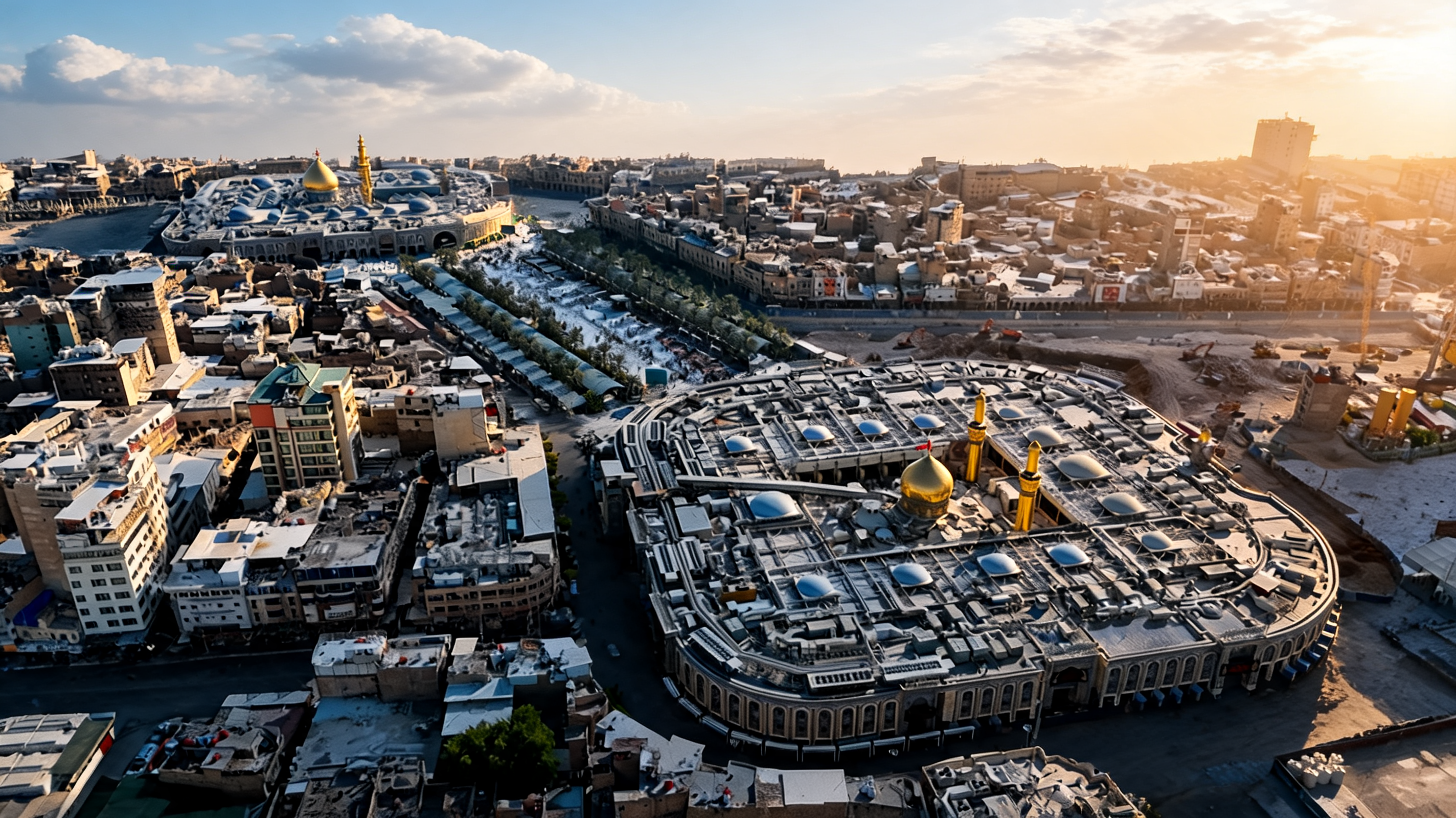
Najaf and Karbala
At major shrines, visitors are expected to dress modestly.
Women are generally required to wear an abaya and head covering. Men should wear modest clothing with appropriate coverage.
You may need to remove your shoes, pass through designated entrances, or leave particular belongings in a storage area.
Photography can also be restricted.
Follow instructions from shrine staff and respect people who are praying.
Churches and Monasteries
Iraq's Christian communities have traditions stretching back many centuries.
When entering a church or monastery, be mindful of any service taking place.
Avoid interrupting prayers, ask about photography, and follow the expectations of the particular community.
Lalish and Yazidi Traditions
Lalish, in Duhok Governorate, is one of the most sacred places in Yazidi religious life.
Visitors traditionally remove their shoes before entering the sacred valley and walk through the site barefoot as an expression of respect.
This is a distinctive custom connected to the significance of the place.
If you visit Lalish, take the time to understand why that tradition matters.
The same principle applies everywhere: learn about a sacred place from the people who maintain and cherish it.
Photography and Respecting People's Privacy
Iraq has countless places worth photographing.
Markets full of life, old streets, architecture, landscapes, and the small details of daily routines.
But not every moment needs to become a photograph.
If you'd like a close-up portrait of someone, ask first.
This is especially important when photographing families, children, people praying, or anyone in a private or sensitive situation. For children, obtain permission from an appropriate parent or guardian.
Someone agreeing to a conversation doesn't automatically mean they're agreeing to appear in a photograph or video.
At religious sites, follow local photography rules. A phone may be allowed in one area while cameras or filming are restricted in another.
Avoid photographing security personnel, checkpoints, military sites, and other restricted facilities.
And if someone declines a photograph, respect their decision without trying to persuade them.
Some of the best experiences are the ones you remember without a camera.
Visiting During Ramadan and Religious Occasions
Iraq's calendar includes religious observances that shape everyday life for different communities.
During Ramadan, many Muslims fast from dawn until sunset.
Meal times, restaurant opening hours, working routines, and social gatherings can change.
Visitors who aren't fasting should respect the local rules and customs concerning eating, drinking, and smoking in public during daylight hours.
Evening meals and family gatherings become particularly important during this period.
Other occasions have their own atmosphere.
Ashura and Arbaeen are significant periods of remembrance and pilgrimage, particularly in Najaf and Karbala.
These are not ordinary tourist festivals, and visitors should approach them with an understanding of their religious meaning.
Christian celebrations, Yazidi observances, Mandaean traditions, and other community occasions also form part of Iraq's cultural calendar.
Before visiting during an important religious occasion, learn what it means to the people observing it.
That understanding makes the experience more respectful and meaningful.
Conversations and Everyday Social Life
One of the most interesting things about travelling is discovering what people talk about.
In Iraq, conversations might begin with something simple.
Where are you from? Is this your first visit? How are you finding the city?
You may hear questions about your family, work, or the places you've visited.
These can be ways of showing interest and beginning a relationship.
You don't need to answer anything that makes you uncomfortable, and you shouldn't assume someone else wants to discuss every aspect of their life either.
Religion, politics, family matters, and recent history can be personal subjects.
Approach them with curiosity and sensitivity rather than assumptions.
And don't expect everyone you meet to have the same opinion.
An Iraqi person's experience of the country is shaped by their own life, community, and circumstances.
Sometimes the most valuable thing you can do is simply listen.
A Few Words Worth Learning
You don't need to speak Arabic or Kurdish fluently to enjoy travelling in Iraq.
But learning a few expressions can make everyday interactions more enjoyable.
Marhaba (مرحبا) means hello in Arabic.
Shukran (شكراً) means thank you.
Shlonak? (شلونك؟) is a familiar Iraqi Arabic way of asking a man how he's doing. Shlonich? is a common form addressed to a woman.
Slaw (سڵاو) means hello in Kurdish.
Supas (سوپاس) means thank you in Kurdish.
You'll hear other languages and variations as you travel through different communities.
Pronunciation and local expressions can change from one place to another.
The goal isn't perfection.
It's showing that you're interested in the people you're meeting.
You Don't Need to Know Everything
It's easy to worry about saying the wrong thing or accidentally missing a custom when visiting somewhere new.
But getting to know a country isn't an examination.
You don't need to memorize every greeting, tradition, or social expectation.
Pay attention. Ask when you're unsure. Respect the people and places around you.
And allow yourself to learn as you go.
Iraq isn't a place where every person lives in exactly the same way.
It's a country of different communities, generations, traditions, and everyday experiences.
The more people you meet, the more you'll begin to understand that.
Sometimes all it takes is a greeting, a little curiosity, and enough time to share a glass of tea.
If your visit includes a place of worship or a hosted meal, Visit Iraq can help you ask about the customs specific to that visit.