Visiting Najaf and Karbala: Planning Your First Journey
Discover Najaf and Karbala through their sacred places and living traditions, with practical guidance for planning the route, your stay and a respectful visit.
By Visit Iraq · Published · Updated · 4 min read

In short
Visiting Najaf and Karbala brings you to major centres of Shia pilgrimage. Their shrines are living places of worship, so a visit needs time and attention to local etiquette. Check the dates of important occasions and current arrangements before travelling. Give each city its own space rather than treating both as one brief stop.
At a Glance
| Pilgrimage | Najaf and Karbala are major Shia pilgrimage cities. |
|---|
Some places ask you to arrive with a little understanding.
Najaf and Karbala are among them.
You may be coming for pilgrimage, an interest in religious heritage, or a wish to understand the faith and traditions that continue to shape everyday life in Iraq.
Whatever brings you here, the cities deserve time and consideration.
The shrines are places of devotion. The streets around them are part of living communities. And the experience becomes more meaningful when you understand something of the people and stories connected to them.
Here's how to begin planning your visit.
What Is the Difference Between Najaf and Karbala?
Najaf is closely associated with Imam Ali and its traditions of religious scholarship. The Imam Ali Shrine is the central landmark for many visitors, alongside the old city and Wadi al-Salam cemetery.
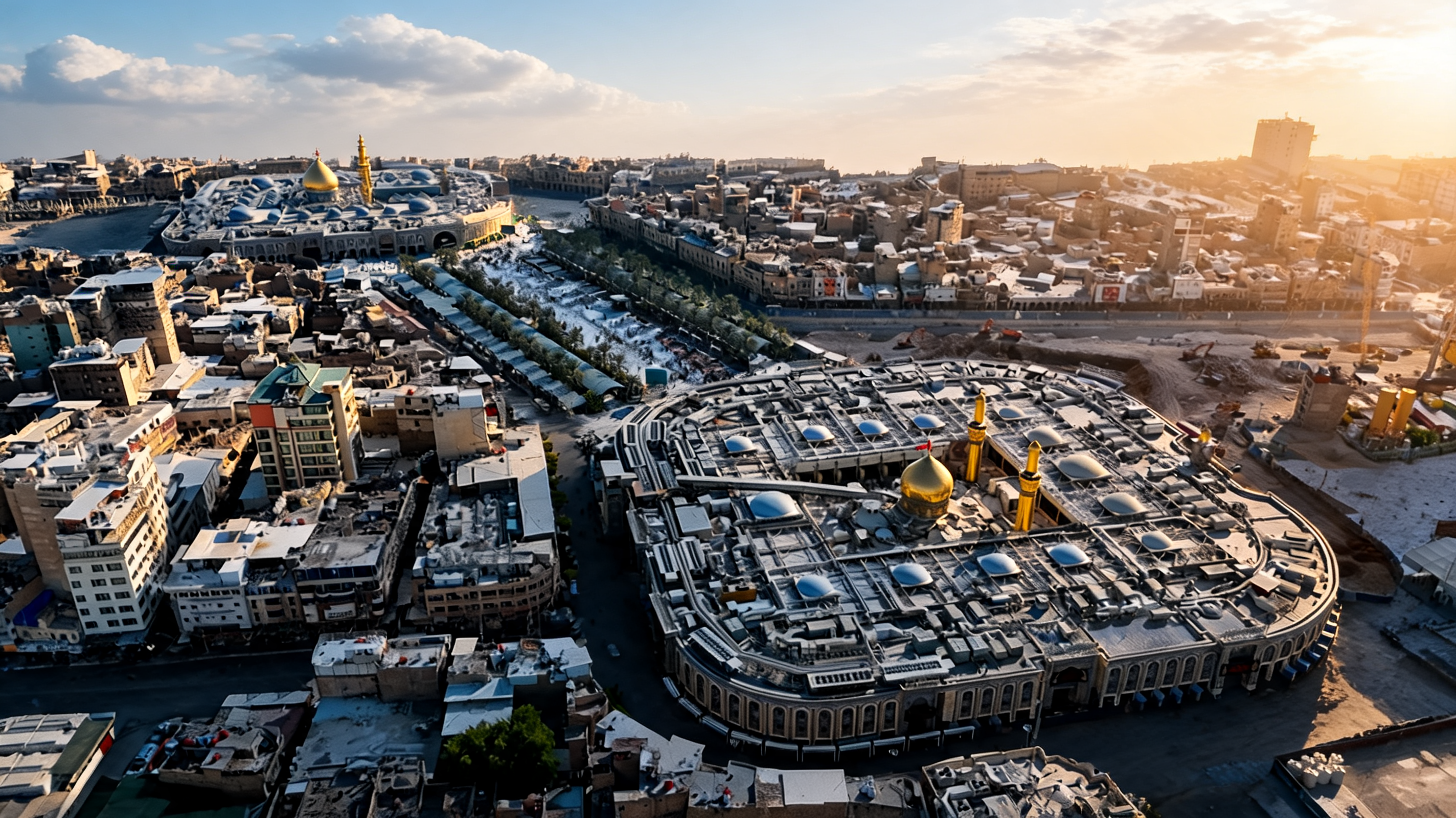
Karbala is associated with Imam Hussain and Al Abbas, whose shrines stand on either side of Bayn al-Haramayn, the open space connecting them.
They are separate cities with their own histories and atmosphere. Visiting one gives you an introduction to a different part of Iraq's religious heritage from the other.
Our Najaf and Karbala place pages introduce the main landmarks. For a journey covering both, think about the route and time in each city together.
Beginning in Karbala
The Imam Hussain and Al-Abbas shrines are the principal points around which to plan a first introduction.
Give yourself time to understand their significance and the relationship between them, rather than treating the visit as two quick stops.
A cultural guide can provide context for the architecture, religious history and customs you encounter. If your visit is primarily for pilgrimage, explain which devotional visits matter most to you so the schedule reflects that purpose.
Around Bayn al-Haramayn, remain considerate of people praying, gathering with family or making their own pilgrimage.
Ask before photographing people, and follow the instructions given for each space you enter.
Discovering Najaf
In Najaf, begin with the Imam Ali Shrine and allow time for the surrounding old city.
Wadi al-Salam is another important part of the city's religious landscape. It is a cemetery with continuing significance to families and visitors, so approach it with the same consideration you would bring to any burial place.
Kufa can form a further part of the route. Our signature itinerary includes the Great Mosque of Kufa between Karbala and Najaf, giving the journey another connection to Iraq's religious history.
If there is a particular mosque, cemetery area or other place you wish to include, name it in your enquiry so it can be considered in the proposed arrangements.
How Can You Include Both Cities?
A useful route example is to travel from Baghdad through Babylon to Karbala, then continue through Kufa to Najaf on the following day.
This is the sequence used in The Visit Iraq Journey. It shows how ancient history and living faith can sit alongside each other within a wider visit to Iraq.
For a private journey, the order and pace can be shaped around your arrival point, dates and interests. You might want longer in one city, a route beginning in Najaf, or more time devoted to pilgrimage.
Share those priorities through our Plan Your Trip form. Include the number of travellers, intended start and finish points, and the places that matter most to you. Our travel designers can bring the transport, guiding and accommodation into one proposal.
Preparing for a Shrine Visit
Choose modest clothing and include shrine visits when thinking about what to pack.
For women, an abaya is worth discussing before the journey so the appropriate arrangements are clear. The Visit Iraq Journey lists abayas for ladies visiting holy shrines among its included services; for a private proposal, establish what is provided for your visit.
Camera equipment, bags, footwear and access to particular areas should be considered according to the instructions at each shrine. A phone camera and professional photographic equipment may need different arrangements.
If photography is central to your interests, mention the equipment and the kind of images you hope to make while the visit is being planned.
Permission to enter a place does not automatically settle permission to photograph there.
Choosing Where to Stay
Accommodation and transport work best when considered together.
Explain whether you prefer to stay close to the places you intend to visit, how much walking suits you, and whether you expect to arrive late or leave early.
Visit Iraq can consider those preferences when preparing your private journey. The proposed stay should match your group, budget and the pace of the visit.
If you're travelling with someone who needs assistance, give the details early. Specify whether the need concerns walking distances, wheelchair access, help during visits or the vehicle itself, so the team can assess the actual arrangements required.
Confirm essential assistance before the trip rather than assuming it comes with a room or transfer.
Planning Around Important Dates
If your visit is connected to Ashura, Arbaeen or another religious occasion, make that the starting point of your enquiry.
A pilgrimage built around a particular observance needs its own plan for accommodation, movements and time at the shrines. The arrangements for an ordinary sightseeing visit should not simply be carried over to those dates.
Tell us what you hope to attend and how much time you have. The team can review your request and explain the proposed arrangements before confirmation.
Give the Journey Meaning
You don't need to understand every tradition before arriving.
Come with curiosity, listen to the people guiding you, and leave time for the places themselves.
For some visitors, the journey is deeply personal. For others, it opens a new understanding of Iraq's history and religious life.
Both begin with paying attention to where you are and the people around you.
Visit Iraq can plan Najaf and Karbala together, allowing time for the shrine quarters and the drive between the two cities.