How Many Days Do You Need in Iraq?
Five days or two weeks? Discover how to plan your first visit to Iraq, choose destinations, and leave enough time for the places and people you'll meet.
By Visit Iraq · Published · 9 min read

How long does it take to discover Iraq?
Five days? Ten? Two weeks?
The answer depends on what you want to experience.
You could spend several days exploring Baghdad alone and still discover somewhere new. You could follow the history of ancient Mesopotamia from Babylon to Ur, visit the sacred cities of Najaf and Karbala, or head north towards Erbil and the mountains of Kurdistan.
Each journey offers something different.
And while you might want to see as much as possible, Iraq is a country that rewards taking your time.
Here's how to decide what fits your first visit.
First, Think About What Brings You Here
Before counting the days, think about what interests you.
Are you coming for the history of ancient Mesopotamia?
Would you like to discover Baghdad's culture, food, neighbourhoods, and everyday life?
Are you interested in religious heritage, archaeological sites, mountain landscapes, or meeting people from different communities?
Maybe it's a little of everything.
There's no wrong answer.
But knowing what excites you will make it much easier to decide where to go and how long to stay.
A journey focused on Baghdad and Babylon requires a different amount of time from one that includes the Marshes, Basra, Mosul, and the Kurdistan Region.
You don't need to visit every part of Iraq to have a meaningful experience.
Sometimes the best introduction begins with just a few places.
Five Days: Your First Introduction to Iraq
If you have five days, I'd recommend choosing one main city and exploring its surroundings.
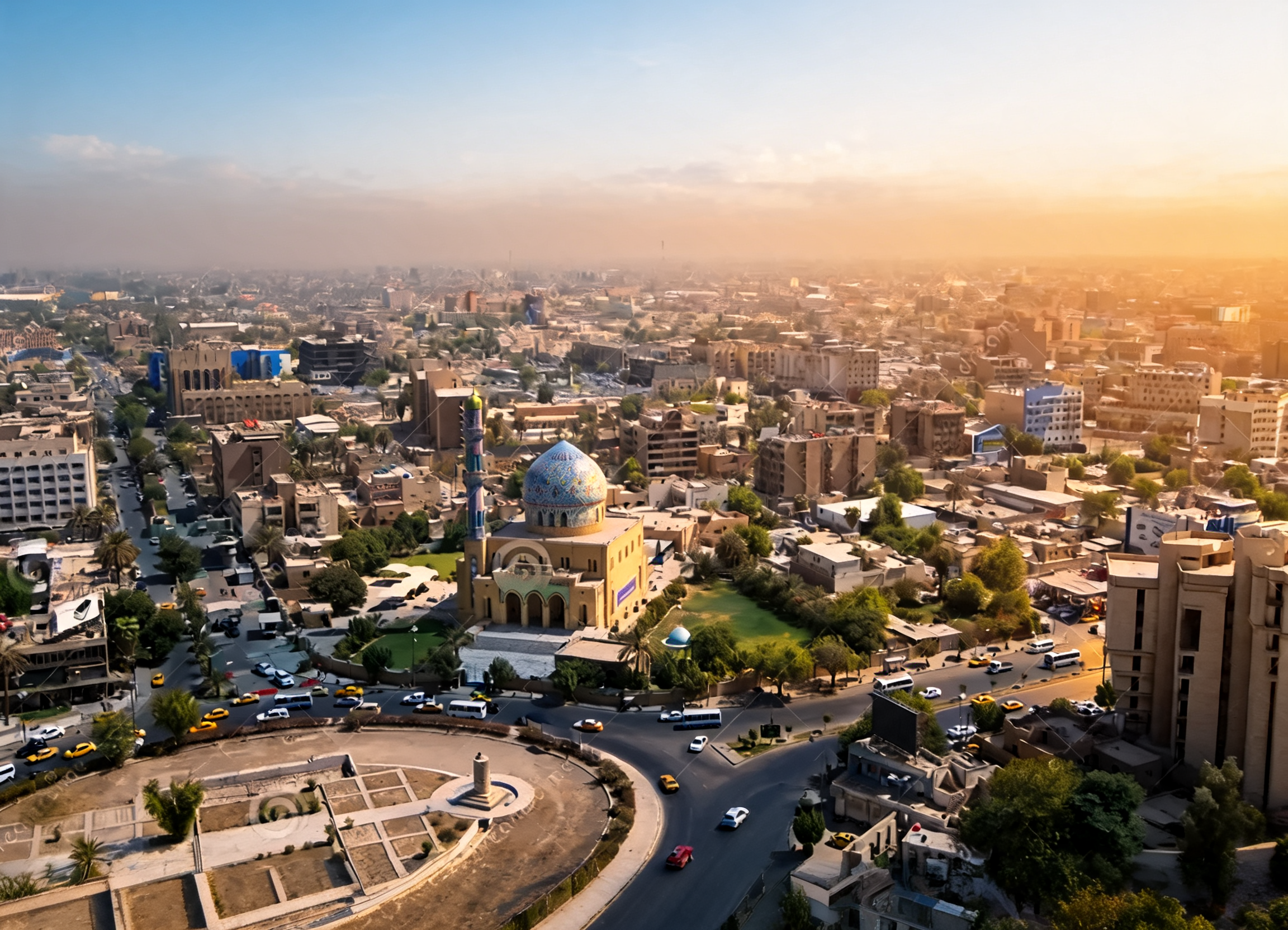
Baghdad is a natural starting point for visitors interested in history, culture, and everyday life.
You could spend your first day arriving, settling in, and getting to know the neighbourhood around your accommodation.
Over the following days, explore some of Baghdad's cultural landmarks.
Walk along Al-Mutanabbi Street, discover the historic Al-Qishla complex, visit the Iraqi Museum when open, and take time to experience the city's cafés, restaurants, and markets.
Another day could take you south to Babylon, one of the ancient world's most influential cities.
Here, you'll encounter the remains of the city associated with Hammurabi and Nebuchadnezzar II.
If you're interested in archaeology, allow yourself enough time to explore the site without rushing.
With five days, there's no need to spend every morning travelling to a different city.
You can discover a great deal by getting to know Baghdad properly.
A possible five-day outline:
Day 1: Arrive in Baghdad and settle in.
Day 2: Discover historic Baghdad and Al-Mutanabbi Street.
Day 3: Explore the Iraqi Museum and other cultural neighbourhoods.
Day 4: Visit Babylon, subject to confirmed access and travel arrangements.
Day 5: Enjoy a final morning before departure.
It's a simple introduction, with time for the city itself rather than only its monuments.
And if your interests are more focused on mountains and northern culture, you could build a five-day visit around Erbil instead.
Seven Days: A Little Further Into Iraq
With one week, you can begin connecting several places without making the journey feel like a race.
A week gives you time to explore Baghdad and travel south towards Babylon, Karbala, and Najaf.
These destinations introduce different chapters of Iraq's story.
Baghdad brings together centuries of history and contemporary culture.
Babylon takes you back to the world of ancient Mesopotamia.
Karbala and Najaf introduce you to places of enormous religious importance, where everyday life and centuries of tradition exist side by side.
For visitors interested in these sacred cities, remember that they aren't simply historic attractions.
They're living places of worship and pilgrimage.
Visiting arrangements, appropriate clothing, and access to religious areas should be understood beforehand.
A possible seven-day outline:
Days 1 to 3: Baghdad, its cultural districts, museums, markets, and everyday life.
Day 4: Babylon, with an overnight stay arranged along the southbound route.
Day 5: Karbala and its religious heritage.
Day 6: Najaf, including the old city and nearby sites where appropriate.
Day 7: Departure from a suitable airport or a previously arranged return transfer.
This is only one possible route. Your arrival and departure airports, the time of your flights, and how much you want to explore will affect the final plan.
For some visitors, seven days entirely within the Kurdistan Region may be a better choice.
Erbil, Duhok, mountain towns, and nearby landscapes can comfortably fill a week when you allow time to appreciate each destination.
The point isn't to visit the greatest number of places.
It's to discover the ones that interest you.
Ten Days: Discovering More of the Country
Ten days gives you more room to connect different experiences.
If you're interested in Iraq's history and culture, this is a useful amount of time for a journey from Baghdad towards southern Iraq.
You could begin with the capital, continue to Babylon, discover Karbala and Najaf, and travel further south towards the ancient city of Ur.
Ur is particularly important for anyone interested in the history of Sumer and the earliest urban civilizations.
The site's famous ziggurat is one of Iraq's most recognizable archaeological landmarks.
Nearby, the landscapes of Dhi Qar tell another part of the story.
The Mesopotamian Marshes are home to communities whose lives have long been connected to the waterways, reeds, and traditional boats of southern Iraq.
A visit to the Marshes is quite different from walking through an ancient city.
Here, the environment and the people living within it are inseparable.
Water levels, boat access, and local arrangements need to be checked for the actual date of your visit.
If your route continues to Basra, you'll discover another city with its own architecture, culinary traditions, and history connected to the rivers and the Gulf.
A possible ten-day outline:
Days 1 to 3: Baghdad and its surrounding cultural heritage.
Day 4: Babylon and onward travel.
Day 5: Karbala.
Day 6: Najaf and Kufa, where access permits.
Day 7: Travel towards Nasiriyah in Dhi Qar.
Day 8: Explore the archaeological site of Ur.
Day 9: Experience the Marshes, subject to local conditions.
Day 10: Departure from the south or onward travel according to your confirmed arrangements.
Basra can be included by adjusting the route, reducing another stop, or adding time.
This isn't a fixed itinerary, and it shouldn't be treated as one.
For visitors who prefer northern landscapes, a ten-day journey could instead concentrate on Erbil, Duhok, Sulaymaniyah, and the surrounding mountains.
Both can be meaningful journeys. They simply tell different stories.
Fourteen Days: More Time for Different Regions
Two weeks opens up more possibilities.
With fourteen days, you can begin to discover how much Iraq changes between its different regions.
You might start in Baghdad, explore Babylon and the sacred cities, continue towards Ur and the southern Marshes, and then make your way north to Erbil.
In the Kurdistan Region, you could spend time discovering the Citadel, local markets, surrounding towns, and mountain landscapes.
With enough time and confirmed access arrangements, you might also visit places around Duhok or Sulaymaniyah.
But even with two weeks, trying to visit every major landmark in Iraq would mean spending too much of the journey in transit.
I'd rather give you more time to understand a few places than make you rush through twice as many.
A possible fourteen-day outline:
Days 1 to 3: Baghdad.
Days 4 to 5: Babylon, Karbala, and Najaf.
Days 6 to 8: Ur, the Marshes, and the southern route.
Day 9: Transfer day between regions, using a confirmed suitable connection.
Days 10 to 12: Erbil and nearby destinations.
Day 13: A northern excursion or an additional day in Erbil.
Day 14: Departure.
You can adjust that balance depending on your interests.
Perhaps you prefer more time in southern Iraq. Perhaps you want to explore Christian, Yazidi, or other cultural heritage in the north. Or maybe you would rather spend several days discovering the different neighbourhoods of Baghdad.
Fourteen days gives you more flexibility.
It doesn't mean you need to fill every hour.
Don't Forget the Time Between Places
One of the easiest mistakes when planning a journey is looking only at the distance between two cities.
On a map, somewhere might appear close enough for a quick visit.
But travelling takes time.
Road conditions, traffic, checkpoints, weather, access arrangements, and major religious gatherings can all affect a journey.
For longer distances, domestic flights may sometimes provide a practical alternative, depending on available services and schedules.
Remember to account for airport transfers and check-in procedures too.
If you're travelling between federal Iraq and the Kurdistan Region, ensure your travel permissions cover the entire route.
And if a place has particular visiting requirements, establish those before building your itinerary around it.
It's worth leaving time for the unexpected rather than planning every day down to the minute.
Choose Your Pace
Not everyone enjoys travelling in the same way.
Some people are happy to begin early, spend the whole day exploring, and move to a different city the following morning.
Others prefer slow breakfasts, time in local cafés, and afternoons with nothing planned.
Neither approach is wrong.
But it's important to know which kind of traveller you are.
If your interests are mainly cultural, you might want additional time for museums, historic streets, and meeting local people.
If you're visiting archaeological sites, you'll need to consider driving time, walking distances, and the weather.
If you're coming for religious occasions, your dates and the expected crowds may shape the entire journey.
And if you're interested in natural landscapes, it's worth allowing extra time for the mountains, villages, or waterways you want to explore.
A good itinerary should fit the person travelling.
Not the other way around.
What About Travelling With Children or Family?
If you're travelling with children, older relatives, or anyone who needs a slower pace, it's worth building more flexibility into your plans.
That might mean staying longer in each city rather than changing accommodation every night.
It could mean shorter sightseeing days, more time indoors during hot weather, and planning activities around meals and rest.
You can still experience Iraq's history, culture, and everyday life without trying to cover long distances every day.
Often, a journey with fewer transfers becomes more enjoyable for everyone.
The same applies to first-time travellers who simply want to feel comfortable getting to know a new place.
There's no prize for doing everything in the shortest possible time.
So, How Many Days Do You Really Need?
If you have five days, choose one area and explore it properly.
If you have seven, you can connect a few destinations that fit together naturally.
With ten days, you can build a broader cultural journey through several parts of Iraq.
And with fourteen days, there's room to begin discovering some of the country's regional differences.
But these are starting points, not rules.
The best length of a journey depends on your interests, your pace, and the experiences you want to remember.
Leave Something for Next Time
There's a temptation when visiting somewhere for the first time to see absolutely everything.
Every museum. Every archaeological site. Every city you've heard about.
But there's something special about returning to a place you haven't finished discovering.
Maybe you came to Iraq for its ancient history and discovered that you loved Baghdad's everyday life.
Maybe you spent a few days in Erbil and left wanting to explore the mountains further.
Or perhaps it was a small moment, a conversation, a shared meal, or a place you hadn't planned to visit, that stayed with you most.
You don't have to discover the whole country at once.
Start with what interests you.
Give yourself enough time to enjoy it.
And leave a little of Iraq for the next journey.
Give Visit Iraq your arrival and departure dates and the two places you most want to see. We can work out where an extra night would give you more time on the ground.