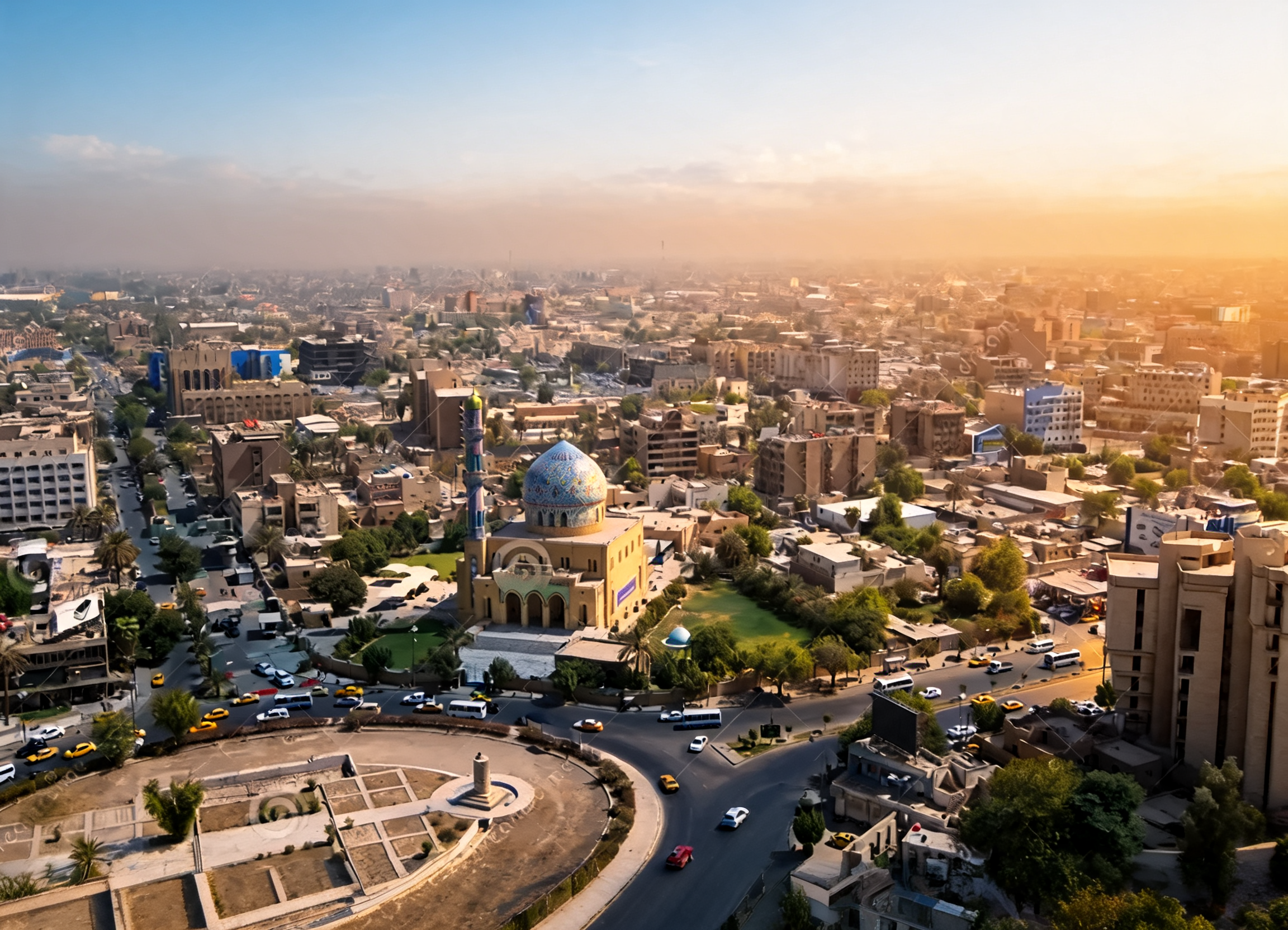
What to See and Do in Baghdad: A Local Guide
Discover Baghdad through its historic streets, bookshops, markets, sacred places, traditional food and the everyday life of Iraq’s capital.
By Visit Iraq · Published · 9 min read
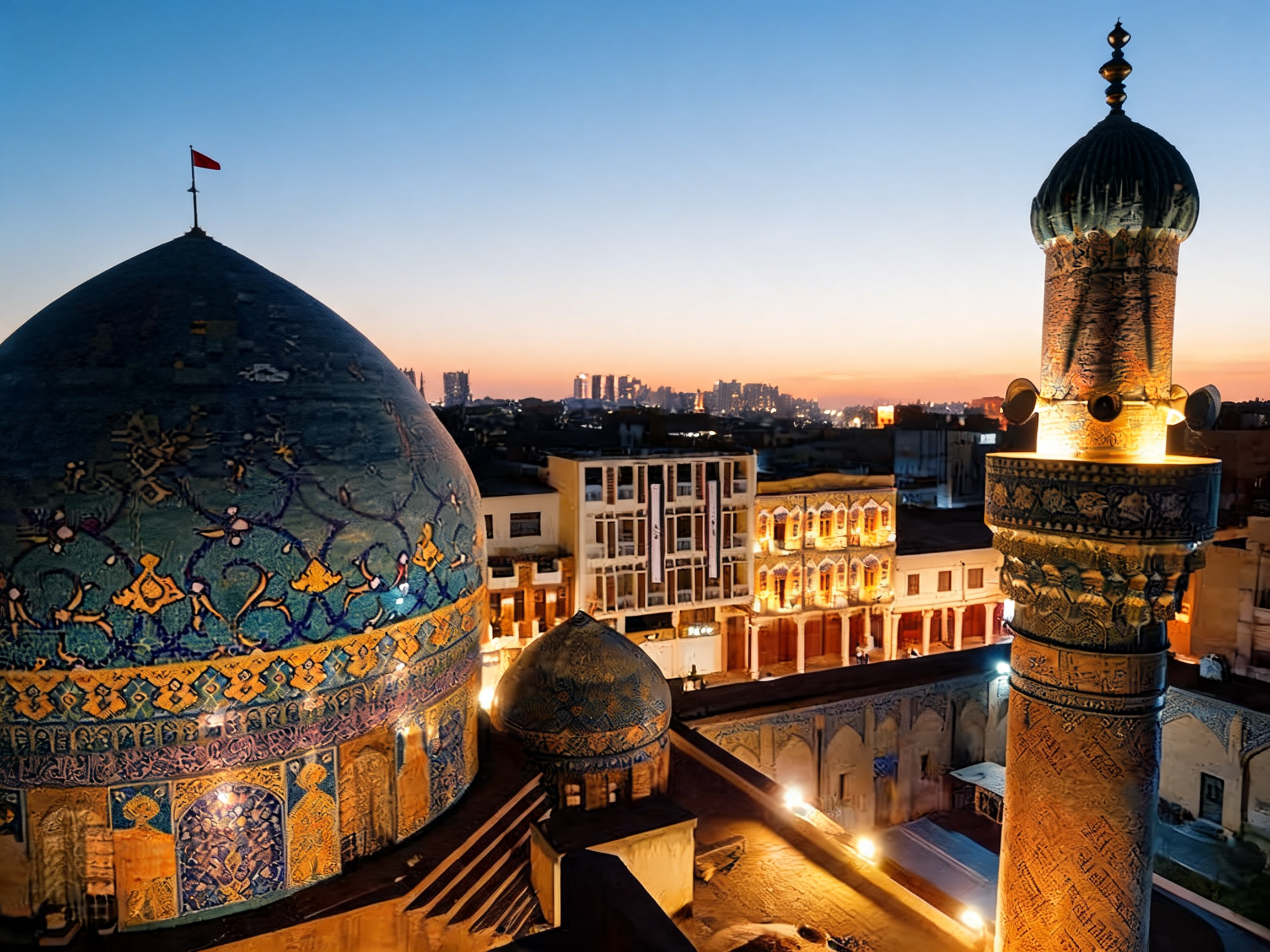
There is a particular kind of morning in Baghdad.
Shopkeepers begin opening their doors. Tea glasses arrive on small trays. Taxis move through busy streets, and somewhere nearby, someone is arranging books on a pavement.
The Tigris continues its journey through the city, just as it has for centuries.
Baghdad is one of the great historic capitals of the world. But to understand it, you have to look beyond its monuments.
You have to experience the city that exists around them.
From centuries-old markets and sacred places to neighbourhood cafés and contemporary cultural spaces, here are some of the most meaningful things to see and do in Baghdad.
1. Begin Your Morning on Al-Mutanabbi Street
If there is one place that captures Baghdad’s relationship with literature, it is Al-Mutanabbi Street.
Named after the celebrated tenth-century poet, the street has long been a gathering place for readers, booksellers, writers, and artists.
Books are displayed outside shops and across pavement stalls. You might find Iraqi poetry, history, philosophy, novels, or old publications that have passed through several generations of readers.
Friday mornings are especially associated with the street’s cultural life, when people gather to browse, meet friends, and exchange ideas.
But there is no need to hurry.
Walk slowly, explore the smaller bookshops, and allow yourself time to discover something unexpected.
What to experience: Bookshops, literary culture, local conversations, photography, and the surrounding historic streets.
2. Have Tea at Al-Shabandar Café
Not far from the bookstalls stands one of Baghdad’s best-known historic coffeehouses.
Al-Shabandar Café is a place where the city’s past feels close.
Photographs of earlier generations cover its walls. Wooden furniture, traditional tea glasses, and the sound of conversations create an atmosphere that has become part of Baghdad’s cultural memory.
For decades, writers, journalists, artists, and ordinary residents have gathered here.
You do not need a special reason to visit.
Order a glass of Iraqi tea, find somewhere to sit, and enjoy a quieter moment in the middle of the city.
Baghdad is often best understood through places like this.
3. Discover the Architecture of Old Baghdad
A short distance from Al-Mutanabbi Street, several historic landmarks reveal the city’s importance during the Abbasid and later periods.
Al-Mustansiriya Madrasa, established in the thirteenth century, is among Baghdad’s most significant surviving medieval educational buildings.
Its brickwork, courtyards, and architectural details reflect a period when Baghdad was a major centre of scholarship.
The nearby Abbasid Palace is another important historic structure associated with the city’s medieval architectural heritage.
The Al-Qishla complex, with its Ottoman-era clock tower, tells a later chapter of Baghdad’s history.
Parts of these historic sites have experienced closures or restoration work. In particular, Al-Qishla has been reported closed to public access during 2026. Confirm access before including it in your plans.
Even where interiors are unavailable, the surrounding streets offer an introduction to different periods of Baghdad’s architectural history.
4. Walk Through Al-Rasheed Street and the Old Markets
Al-Rasheed Street has been part of Baghdad’s urban identity for more than a century.
Historic façades, commercial buildings, traditional markets, and busy pedestrian areas recall the city’s development through the twentieth century.
Restoration work has brought renewed attention to sections of the street, although other areas remain affected by ongoing improvements.
Nearby, Souk al-Saray is known for books, stationery, and publishing-related shops.
Souk al-Safafeer, traditionally associated with Baghdad’s coppersmiths, introduces another part of the city’s commercial heritage.
These markets are worth visiting not only for what they sell, but for the people and skills connected to them.
Watching a craftsperson work or speaking with a local shopkeeper can reveal something that a monument alone cannot.
5. Explore Baghdad’s Sacred Neighbourhoods
Religion has played an important role in Baghdad’s history, architecture, and community life.
Two districts offer particularly meaningful introductions to this heritage.
Kadhimiya is home to the Al Kadhimiya Shrine, one of the important pilgrimage sites in Shia Islam. Its golden domes and surrounding markets form part of the district’s identity.
Across the Tigris, Adhamiya is associated with Imam Abu Hanifa and the traditions of Sunni Islamic scholarship.
Both neighbourhoods are living religious communities, not simply sightseeing destinations.
Visitors should respect the spiritual purpose of these places, observe modest dress requirements, and ask about access and photography before entering religious areas.
Some spaces may have restrictions depending on visitor status, religious observances, and current arrangements.
Approaching these neighbourhoods with patience and respect makes the experience more meaningful.
6. See the Monument to Freedom at Tahrir Square
Baghdad’s history is not limited to its ancient or medieval past.
At Tahrir Square stands the Monument to Freedom, created by Iraqi sculptor Jawad Salim and unveiled in 1961.
Its bronze figures represent ideas of struggle, suffering, hope, and liberation.
The monument is one of the most significant works of modern Iraqi public art.
It also offers a way to understand how Iraq’s modern history has been represented through visual culture.
Look closely at the figures, their movement, and the relationship between the different scenes.
This is not only an important landmark.
It is a work of art that asks visitors to think about the country’s recent history.
7. Spend an Evening Near the Tigris
The Tigris is more than a river passing through Baghdad.
It has shaped the city’s geography, development, literature, and daily life for generations.
Along parts of Abu Nuwas Street and the riverfront, restaurants and public spaces offer opportunities to experience the city from another perspective.
As the afternoon turns into evening, Baghdad takes on a different atmosphere.
Families gather, restaurants become busier, and the river reflects the surrounding lights.
One of the traditional foods associated with the Tigris is masgouf, a style of grilling freshwater fish over an open fire.
It is a meal worth taking time over.
Choose a suitable riverfront restaurant, enjoy the food, and experience a part of Baghdad’s social life that continues beyond its famous landmarks.
8. Taste Baghdad Through Its Food
Food is one of the simplest ways to become familiar with a city.
In Baghdad, a day might begin with kahi and geymar, flaky pastry served with rich clotted cream.
Later, you might try Iraqi kebab, dolma, kubba, or a traditional home-style meal.
For something sweet, visit a local bakery or confectionery shop and discover the desserts people enjoy with tea.
But the experience is not only about particular dishes.
It is also about how food is shared.
Restaurants, family gatherings, cafés, and small neighbourhood shops all contribute to Baghdad’s food culture.
Rather than trying to eat at every famous restaurant, make time to discover different settings.
A traditional breakfast, a simple lunch, and an evening meal by the river can each introduce you to a different part of the city.
9. Discover Contemporary Baghdad
Baghdad is a city of writers, musicians, designers, filmmakers, students, entrepreneurs, and artists.
Its cultural life did not end with the Abbasid era.
Neighbourhoods such as Karrada and Mansour are associated with contemporary restaurants, cafés, shopping, and social life.
Cultural venues, galleries, theatres, and occasional exhibitions offer opportunities to encounter the people creating Baghdad’s present.
If your visit coincides with a concert, art exhibition, theatre performance, or local cultural event, consider including it in your experience.
These moments help visitors understand Baghdad beyond its historical landmarks.
They reveal a city whose cultural identity continues to develop.
You can explore current exhibitions, concerts, and cultural activities through the Visit Iraq What’s On calendar.
10. Discover Iraq’s Ancient Heritage at Aqar Quf
A short journey beyond central Baghdad brings you to an entirely different period of history.
Aqar Quf, the site of ancient Dur-Kurigalzu, was an important centre during the Kassite period of Mesopotamian history.
Its surviving ziggurat rises above the surrounding landscape, offering a remarkable reminder of the civilisations that existed long before modern Baghdad.
Unlike the busy streets of the capital, the archaeological site provides a more open landscape in which to consider the scale of ancient Mesopotamia.
In October 2026, the first section of a new archaeological park at Aqar Quf was inaugurated as part of an Iraqi-Italian heritage initiative.
The site is worth considering for visitors with an interest in archaeology, provided current access and local travel arrangements are confirmed.
11. Check Visitor Access at the Iraq Museum
For anyone interested in Mesopotamian civilisation, the Iraq Museum is one of Baghdad’s most important cultural institutions.
Its collections represent thousands of years of history, from prehistoric communities and ancient Mesopotamian cities to later periods of Iraqi heritage.
The museum has undergone renovation work and was reported closed to visitors during 2026.
Do not assume it is open without checking its current status.
When public access resumes, it deserves a significant place in any heritage-focused Baghdad itinerary.
Until then, Baghdad’s archaeological and architectural landmarks offer other ways to begin exploring Iraq’s history.
How Many Days Should You Spend in Baghdad?
For a first-time visitor, three or four days provide a useful starting point.
Day One: Old Baghdad
Begin with Al-Mutanabbi Street and Al-Shabandar Café. Continue through the historic quarter, explore the markets and Al-Mustansiriya area, and enjoy an evening near the Tigris.
Day Two: Culture and Community
Discover Baghdad’s religious and cultural neighbourhoods, visit the Monument to Freedom, and explore the city’s contemporary cafés and restaurants.
Day Three: Ancient Heritage
Consider a visit to Aqar Quf, then return to Baghdad for an afternoon or evening discovering a neighbourhood, market, or cultural venue that interests you.
Day Four: Experience the City at Your Own Pace
Leave space for a longer cultural visit, a local food experience, an exhibition, or simply more time getting to know Baghdad.
These are suggested themes rather than a fixed route. Actual plans should account for travel times, access, religious observances, weather, and current local conditions.
Before You Explore Baghdad
Baghdad is a large and busy capital. Its neighbourhoods, travel times, and visitor arrangements vary.
October through April generally offers more comfortable conditions for outdoor exploration than the intense summer months, although temperatures vary throughout the season.
Plan transportation between neighbourhoods rather than expecting to walk across the entire city.
Keep some Iraqi dinars available for small purchases, cafés, and local markets.
Respect photography restrictions, particularly around security installations, religious sites, and government buildings.
Security risks remain serious and can change. Understand the current conditions affecting the places you intend to visit and make informed decisions about whether and how to travel.
For broader preparation, read our first-time visitor guide and transportation guide.
Baghdad Is More Than a Collection of Landmarks
You can visit Baghdad to learn about the Abbasids, explore ancient history, discover Islamic architecture, or see places you have read about for years.
And all of those experiences matter.
But somewhere between the bookshops, the markets, the cafés, and the river, you begin to notice another Baghdad.
The one that belongs to the people living here today.
A city that wakes up, goes to work, gathers for food, creates art, raises families, and continues writing its own story.
The monuments help explain where Baghdad has been.
Its people help you understand what Baghdad is.
Discover Baghdad with Visit Iraq
Visit Iraq can plan a Baghdad walk around the bookshops, architecture or food that draws you to the city, with a pickup point agreed in advance.